
 english
 Italiano
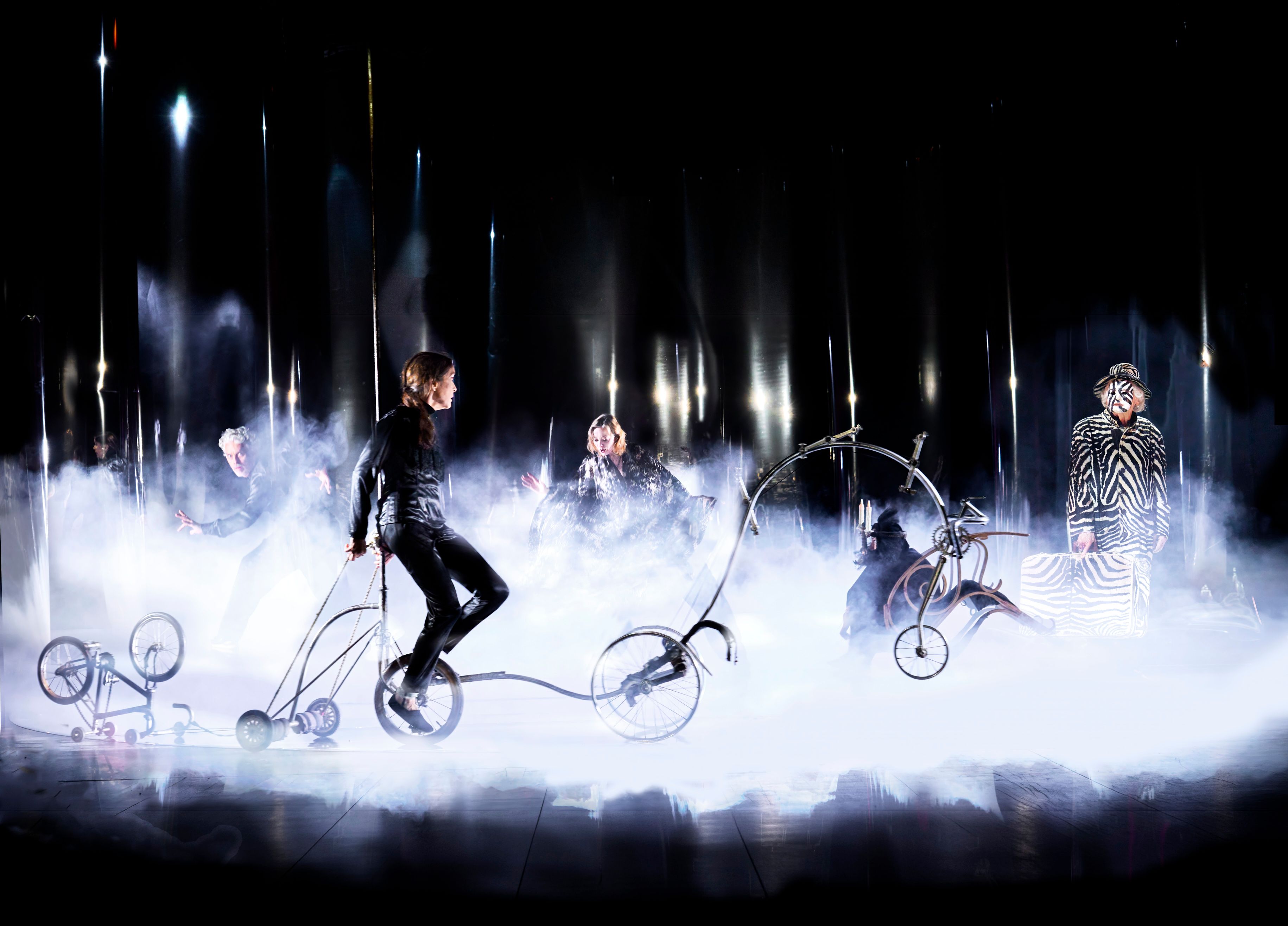
Rendez-vous is an ode to the circus staged by Victoria Thierrée-Chaplin, Jean-Baptiste Thierrée, Aurélia Thierrée and James Thierrée. The production premiered last June at the Teatro Mercadante in Naples as part of the Campania Teatro Festival. It tells the story of an encounter at the crossroads of imagination. On this special occasion, Victoria, Jean-Baptiste, Aurélia and James open their family album of memories and revisit fragments of their past performances in a dreamlike journey. The result is an intimate narrative weaving together circus, theatre and music hall. From the birth of Cirque Bonjour in 1971 to Cirque Invisible, and through La Symphonie du Hanneton, L’Oratorio di Aurélia, Raoul and Murmures des murs, Rendez-vous unleashes a firework display of stolen moments in which imagination reigns supreme.
“We could resort to every kind of cliché,” James Thierrée explains. “We could give you a detailed account of the whys and wherefores, telling you that Rendez-vous is either a return to our roots, an artistic culmination, a family mise en abyme, or perhaps a way of bringing things full circle. We could talk about transmission, theatrical ground, lineage, children of artists, or the idealistic travelling performers who created a new circus in the 1970s. We could psychologise the whole thing, stage our innermost reasons or shared eccentricities, and lay out an entire range of motives that led us to share this stage once again, several decades after that lovely, now faded family photograph. But we won't. We will leave you free to imagine, dream or disregard all of this, so that you can wander all the more freely alongside us into the heart of this singular rendezvous.”
The show is a phantasmagoria, a veritable play of mirrors brought to life by a dazzling set of movable panels and reflective costumes that evoke its most significant moments. These are the unforgettable acts of a family that has devoted its entire life to creating wonder, forging a new vision of performance that sowed the seeds of nouveau cirque. It all began with the pioneering experience of Cirque Bonjour, presented at the Avignon Festival in 1971, and continued in theatres around the world with Cirque Imaginaire, which later became Cirque Invisible. At the heart of the production are Victoria Thierrée-Chaplin and Jean-Baptiste Thierrée. She, Charlie Chaplin’s daughter, transforms costumes and objects into worlds inhabited by fantastic creatures. He, an actor, illusionist, juggler and clown, performs brief acts and eccentric interludes with disarming irony and delicacy. Together, they passed on their gift for imagining to their children, Aurélia and James, who grew up playing onstage, sometimes shut away inside their suitcase of dreams.
With the support of her mother Victoria, who directed and designed the sets for her productions, Aurélia developed an artistic path of her own. Her works include L’Oratorio di Aurélia (2003–2011), a political journey inspired by medieval illustrations of the “world turned upside down”; Murmures des Murs (2011–2018), centred on the memory held by walls and the hallucinations of a woman fleeing through historic buildings and abandoned rooms; and her latest production, Bells and Spells, which is still being performed, in which she plays a kleptomaniac haunted by the objects she steals.
Alongside his career as a film and theatre actor, James founded his own company, La Compagnie du Hanneton, in 1998. With it, he has created a series of productions that expand the expressive possibilities of performance, blending circus with dance, operatic singing and pop music. These include La Symphonie du Hanneton (1998), the artist’s first major international success, which received numerous awards; La Veillée des Abysses (2003), a surreal work exploring profound, dreamlike spaces; Au Revoir Parapluie (2007), a show combining acrobatics, illusions and a profound sense of visual magic; Raoul (2009), a memorable production in which the protagonist interacts with bizarre objects and fantastic creatures; Tabac Rouge (2013), an intense and complex creation exploring power and madness; La Grenouille avait raison (2016), a dizzying journey through stage machinery and metamorphoses; and The Room (2022), an intimate, stripped-back work of musical theatre featuring a large ensemble of musicians and dancers.
“Theatre is a crossroads of languages, and this is what makes it truly unique and essential to our inner lives,” says Ruggero Cappuccio, artistic director of the Campania Teatro Festival. “Within theatre, music, the visual arts, drawing, sculpture, poetry, literature, dramaturgy and storytelling intersect, blend and engage in dialogue.
“Words in the theatre are not read; they are heard. The relationship between the spectator and those onstage is not based on signs. The spectator is not confronted with a page and does not have to decode symbols, but rather perceive sounds. The relationship we experience in the theatre is symphonic, not semiotic.
“Yet, when it comes to Rendez-vous, it is particularly interesting to turn this argument on its head. Victoria Chaplin, together with Jean-Baptiste, Aurélia and James Thierrée, creates theatre without words. But here, too, there is a misconception, because this wordless theatre is, in fact, a form of stage writing. Onstage, we write not only with words, but also with gestures, and even with silences. The eagle does not speak, yet its flight makes others speak. The lion does not speak, but the way it looks at us makes something within us speak. Dogs and cats do not speak, but the way they move, observe us and relate to us gives voice to something within us.
“In the work of the Chaplin-Thierrée family, there are no words, yet everything that happens onstage makes something within us speak. It is no coincidence that imaginary animals have always played such a powerful role in their Cirque Invisible performances. This kind of writing imposes nothing on those who watch, contemplate or perceive; instead, it calls for a profound sense of complicity.
“I am interested in those art forms that demand a strong engagement from the observer, setting in motion an inner process that ignites a wholly personal imagination. This can happen in literature, it can happen in music, and it happens in theatre, too. The power of imagination is the only possible path to the freedom of individuals and communities. These are the main reasons why, at the Campania Teatro Festival, we often programme productions that place great emphasis on wordless theatre and on forms of performance in which imagination is central.”
È un’ode al circo quella che Victoria Thierrée-Chaplin, Jean-Baptiste Thierrée, Aurélia Thierrée e James Thierrée mettono in scena nello spettacolo Rendez-vous, in programma lo scorso giugno in prima assoluta al Teatro Mercadante di Napoli per il Campania Teatro Festival. È la storia di un incontro, al crocevia dell’immaginazione. In questa occasione speciale, Victoria, Jean-Baptiste, Aurélia e James aprono il loro album dei ricordi e rivisitano, come in una traversata onirica, frammenti dei loro spettacoli del passato. Nasce così un racconto intimo che intreccia il circo con il teatro e il music-hall. Dalla nascita del Cirque Bonjour nel 1971 al Cirque Invisible, passando per La Symphonie du Hanneton, L’Oratorio di Aurelia, Raoul e Murmures des murs, Rendez-vous scatena un fuoco d’artificio di istanti rubati, dove la fantasia regna sovrana.
«Potremmo ricorrere a ogni sorta di cliché – dichiara James Thierrée – spiegarvi con dovizia di particolari il perché e il percome, dirvi che Rendez-vous o è un ritorno alle origini, un culmine artistico, una mise en abyme familiare, o ancora un modo di chiudere il cerchio. Potremmo parlarvi di trasmissione, di terreno teatrale, di lignaggio, di figli d’arte o di saltimbanchi idealisti che negli anni ‘70 crearono un nuovo circo. Si potrebbe psicologizzare tutto questo, mettere in scena le nostre ragioni intime o le nostre stranezze comuni, ed esporre così un intero fascio di motivi che ci hanno spinto a condividere di nuovo questo palcoscenico, qualche decennio dopo quella bella foto di famiglia ormai sbiadita. Ma non lo faremo. Vi lasceremo immaginare, sognare o ignorare tutto questo, per divagare ancora meglio insieme a noi nel cuore di questo singolare appuntamento».
Lo spettacolo è una fantasmagoria, un vero e proprio gioco di specchi realizzato grazie a una splendente scenografia di pannelli mobili e a costumi riflettenti che rimandano i momenti più salienti. Sono i numeri memorabili di una famiglia che ha dedicato la vita intera a meravigliare, creando un nuovo modo di intendere lo spettacolo che ha gettato i semi del nouveau cirque, a partire dall’esperienza pioneristica del Cirque Bonjour andato in scena al Festival di Avignone nel 1971, proseguendo poi nei teatri di tutto il mondo con il Cirque Imaginaire, divenuto poi Cirque Invisible. I protagonisti sono Victoria Thierrée-Chaplin e Jean-Baptiste Thierrée: lei, figlia di Charlie Chaplin, trasformando costumi e oggetti è capace di creare mondi abitati da creature fantastiche; lui, attore, illusionista, giocoliere e clown, si esibisce in brevi numeri e siparietti stravaganti con ironia e delicatezza disarmante. Insieme hanno trasferito la capacità di immaginare ai loro figli, Aurélia e James, cresciuti giocando sulle tavole del palcoscenico, a volte chiusi nella loro valigia dei sogni.
Aurélia ha sviluppato un percorso artistico proprio con il sostegno della madre Victoria, che ha firmato le regie e le scenografie dei suoi spettacoli: L’Oratorio di Aurélia (2003-2011), un viaggio politico ispirato alle illustrazioni medievali del "mondo alla rovescia"; Murmures des Murs (2011-2018), incentrato sulla memoria dei muri e sulle allucinazioni di una donna in fuga tra palazzi storici e stanze abbandonate; l’ultimo, ancora in scena, Bells and Spells, in cui impersona una cleptomane vittima degli oggetti che ruba.
James, oltre a intraprendere un percorso come attore di cinema e teatro, fonda nel 1998 la sua compagnia La Compagnie du Hanneton, con cui crea diversi spettacoli allargando l’orizzonte dei mezzi espressivi e contaminando il circo con la danza, il canto lirico e la musica pop: La Symphonie du Hanneton (1998), primo grande successo internazionale dell'artista, premiato con diversi riconoscimenti; La Veillée des Abysses (2003), un'opera surreale che esplora spazi profondi e onirici; Au Revoir Parapluie (2007), uno show che mescola acrobazie, illusioni e un profondo senso di magia visiva; Raoul (2009), uno spettacolo memorabile in cui il protagonista dialoga con oggetti bizzarri e creature fantastiche; Tabac Rouge (2013), una creazione intensa e complessa sul potere e la follia; La Grenouille avait raison (2016), un viaggio vertiginoso tra macchine sceniche e metamorfosi; The Room (2022), uno spettacolo di teatro musicale intimo ed essenziale con un grande ensemble di musicisti e danzatori.
«Il teatro è un crocevia di linguaggi, e questo lo rende davvero unico ed essenziale per la nostra esistenza interiore - racconta Ruggero Cappuccio, direttore artistico del Campania Teatro Festival – al suo interno si incrociano, si miscelano, si confrontano la musica, le arti figurative, il disegno, la scultura, la poesia, la letteratura, le drammaturgie, la narrativa.
La parola a teatro non si legge, si ascolta. Il rapporto dello spettatore con chi è in scena non è un rapporto fondato sul segno, lo spettatore non si trova di fronte ad una pagina, non deve decodificare dei segni, deve percepire dei suoni. Il rapporto che abbiamo a teatro è un rapporto sinfonico, non è un rapporto segnico. Molto interessante però, a proposito dello spettacolo Rendez-vous, ribaltare il discorso. Victoria Chaplin, insieme a Jean-Baptiste, Aurélia e James Thierrée, fa un teatro senza parole. Ma anche qui c'è un equivoco, perché quel teatro senza parole è in realtà una scrittura di scena. In scena non si scrive soltanto usando le parole, ma si scrive usando dei gesti, si scrive perfino usando dei silenzi. L'aquila non parla, però il suo volo fa parlare gli altri. Il leone non parla, ma il modo in cui ci guarda fa parlare qualcosa dentro noi. I cani, i gatti non parlano, ma il modo in cui si muovono, ci osservano, si relazionano a noi, fa parlare qualcosa dentro noi. Nei lavori della famiglia Chaplin-Thierrée non c'è la parola, ma tutto quello che avviene in scena fa parlare qualcosa dentro noi. Non è un caso se nei loro spettacoli di cirque invisible la presenza di animali immaginari è sempre molto forte. Questo genere di scrittura non impone niente a chi osserva, a chi contempla, a chi percepisce, ma chiede una fortissima complicità.Mi interessano quelle arti che chiedono all'osservatore una forte complicità, attivando un lavorio personale che provoca l'accensione di un’immaginazione del tutto personale. Un processo che può accadere in letteratura, può accadere in musica, accade anche nel teatro. La capacità immaginativa è l'unica strada possibile per la libertà dell'individuo e delle collettività. Sono questi i motivi più rilevanti per i quali spesso nel Campania Teatro Festival programmiamo creazioni che riservano una grande attenzione a un teatro senza parole e a un teatro in cui l'immaginazione è centrale».
